Anne-Marie Trevelyan was Minister for Defence Procurement 2019-20 and Minister for the Indo-Pacific 2022-24.
The United States Navy faces a strategic challenge. It needs more ships, more quickly, and at a cost that allows it to sustain a larger fleet. It needs more warships capable of operating across increasingly contested oceans, protecting vital trade routes and deterring adversaries. It also needs to embrace a fundamental change in naval warfare which the UK’s Royal Navy is leading on: the integration of crewed warships with autonomous surface vessels, underwater systems and airborne drones.
This is precisely why Babcock shipbuilders’ deserves serious consideration.
The US does not need another warship class that takes a decade to design, costs a fortune to build and consumes ever-increasing resources to operate. It needs a capable, adaptable and affordable fighting platform that can be produced at scale, crewed efficiently and upgraded as technology evolves. And Arrowhead 140 offers that proposition.
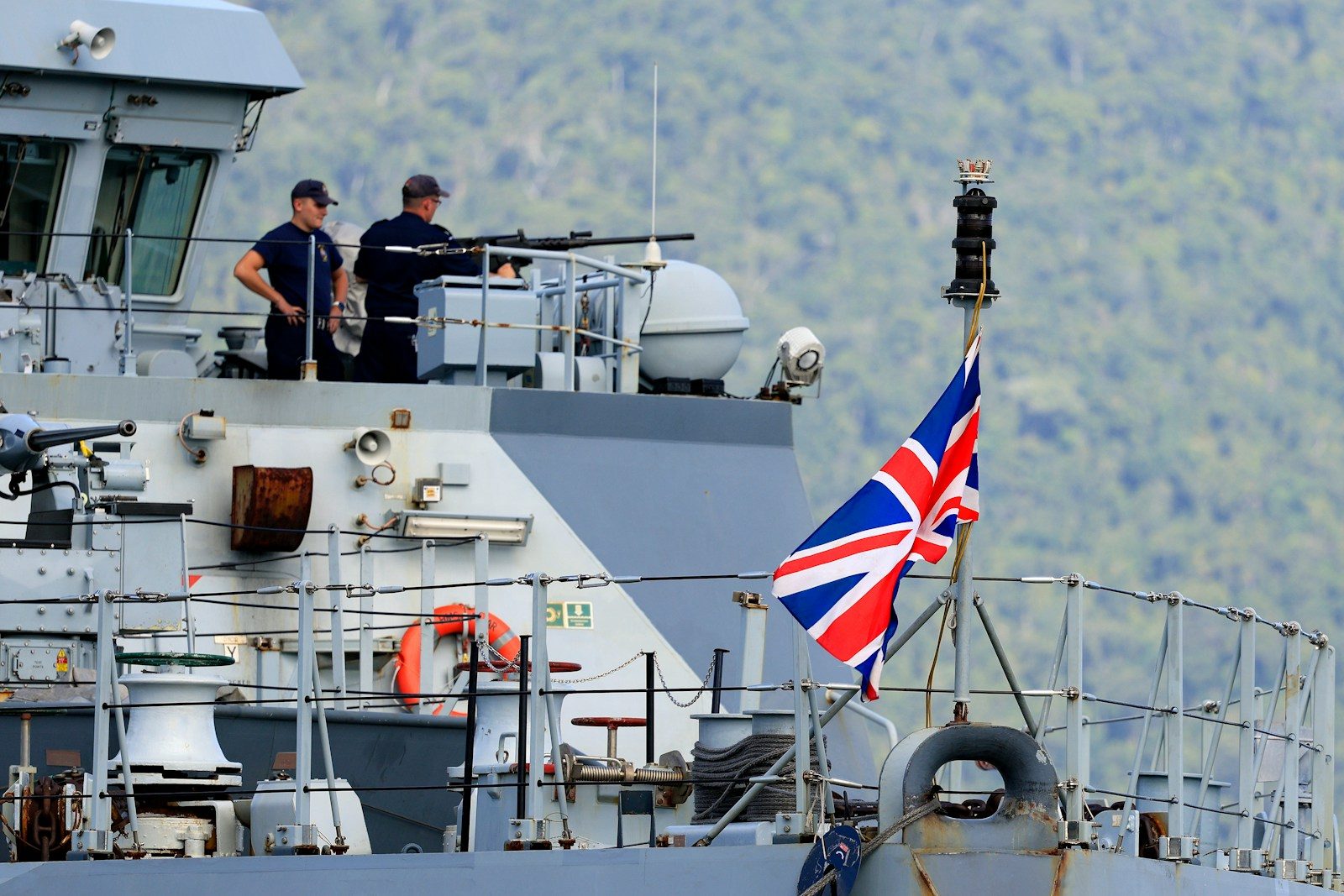
Arrowhead 140 is a proven, adaptable platform with a substantial operational envelope, which the Royal Navy is building as their Type 31. Its versatility is its greatest strength. It can undertake maritime security, escort, surveillance, anti-submarine and surface warfare missions, while retaining the capacity to accommodate evolving weapons, sensors and mission systems.
This matters because tomorrow’s naval battles will not be fought by individual ships operating in isolation. They will be fought by integrated networks of platforms, sensors and weapons, sharing information and delivering effects across vast distances.
The future US fleet will combine traditional crewed warships with autonomous surface vessels, underwater drones and uncrewed aerial systems. These platforms will extend surveillance, improve targeting, increase persistence and provide additional mass. But autonomous systems need somewhere to operate from. They need a mothership: a platform that can deploy them, communicate with them, coordinate their activities, process information and integrate their contribution into the wider battle.
Arrowhead 140 offers the space, flexibility and aviation facilities to provide that foundation, and the Royal Navy is already planning this solution for the UK naval expansion the First Sea Lord is building now.
Rather than attempting to make every frigate an increasingly expensive arsenal ship, the US Navy could use Arrowhead 140 as a command and control hub for a distributed network of autonomous capabilities.
Imagine a frigate deploying uncrewed surface vessels to extend its surveillance perimeter, underwater vehicles to monitor critical infrastructure, and aerial drones to provide persistent intelligence. The frigate remains the command platform, but its operational reach is multiplied many times over. This is not a futuristic luxury but an increasingly essential element of maritime warfare.
For too long, Western navies have faced the temptation to pursue ever more sophisticated ships at ever greater cost. The result is fewer platforms, higher sustainment costs, reduced availability and therefore an increasingly overstretched fleet.
The pre-war world that we are now in means that there is little strategic value in possessing a handful of extraordinarily capable warships if there are insufficient numbers to protect trade routes, escort carrier groups, maintain presence and respond simultaneously to multiple crises.
Arrowhead 140 offers a different approach: a capable, multi-role frigate built around an adaptable design and a more sustainable operating model.
Its lean-crewed philosophy also matters. Personnel are among the most expensive and difficult resources to generate in any modern navy. Automation and efficient ship design can help reduce crew demands, improve availability and release highly trained sailors for other operational priorities.
A smaller crew does not mean a lesser warship. It means making better use of technology, engineering and people. The strategic prize is more ships at sea, more frequently, delivering more operational effect for every dollar invested.
The US shipbuilding challenge is not simply about designing better ships. It is about rebuilding the capacity to manufacture them, consistently and at pace.
Arrowhead 140 has a significant advantage here. It is not an untested concept on a drawing board. It is a mature design already being built for the Royal Navy, with export variants selected and being built, with the ArrowYard modern digital shipyard created by Babcock in Rosyth, by Poland and Indonesia.
That provides a valuable foundation for reducing design risk and accelerating delivery. The modularity offers opportunities for American shipyards and suppliers to adapt the platform to US requirements and strengthen domestic industrial participation.
A US-built Arrowhead 140 USA frigate would not be an imported British warship. It would be a transatlantic industrial partnership, bringing together British design, build and training expertise with American manufacturing scale. That is a proposition with economic as well as strategic value.
The Atlantic alliance cannot afford to think about maritime security in purely national terms. Our adversaries are investing in shipbuilding, autonomous systems, long-range weapons and the ability to challenge Western access to critical sea lanes. The answer must be greater industrial cooperation, interoperability and collective capacity.
A common frigate design, adapted to national requirements, would strengthen the ability of NATO and allied navies to operate better together, share technology and sustain one another in times of crisis. Arrowhead global supply chains would underpin US and UK global naval actions, bringing Five Eyes’ closest partners even more effectively working together to keep the world safe.
The US Navy is doing the hard work keeping maritime chokepoints open for the benefit of all of us, putting in vast resources to protect our civilian shipping, keeping waterways open & safe to traverse. The lack of a 6-7000 tonne workhorse warship in the US naval arsenal means they have to use more complex warships for lower level constabulary work from blockade to continuous deterrence – Arrowhead 140 brings a trusted partner’s answer to that hi-low mix needed.
This solution to their frigate class gap can assist the USA strengthen their navy, put to use every day for all our benefit and security. Delivering world-class capability that serves not only our own national interests but those of our closest ally is a great goal.
Arrowhead 140 is not a destroyer, nor does she pretend to be one. Her strength is that she can undertake a wide range of demanding missions without the cost and complexity of a much larger combatant and cohere the future hybrid navy. The prize is not simply winning an American frigate contract. It is helping shape the next generation of Western naval power.
Britain is offering Arrowhead 140 as the best solution to the President’s call. America can be pragmatic and recognise Arrowhead 140 as the uniquely effective solution for their needs. Let’s hope both countries can be strategic together to seize this opportunity.