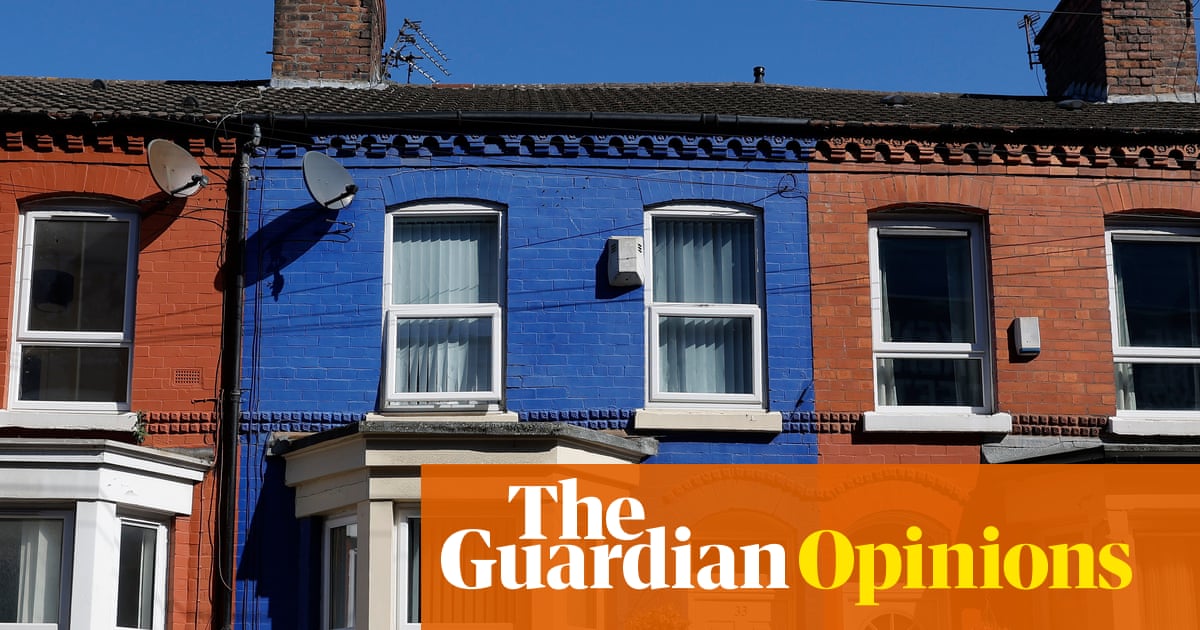
hen voters were asked in 2020 which tax they would cut first, council tax came out on top, and rightly so. Still, it's taken six years for an array of Labour and Liberal Democrat MPs to call for reforms to this most grotesquely unjust tax.
Prompted by a public petition organised by the campaign Fairer Share, a Westminster Hall debate heard calls for a review into property taxes, which would lay out options for replacing council tax and stamp duty land tax. Labour MPs were among those who have signed a letter to Downing Street calling for property tax reform to be a priority in Andy Burnham's upcoming 10-year plan. Among flotillas of economists and thinktanks who signed the letter is Lord O'Neill, a Burnham adviser and former Goldman Sachs economist, who calls UK property taxation "utterly nonsensical". Burnham has frequently backed reform of the "highly regressive" council tax and stamp duty, labelling them as "a tax on the aspiration of young people".
Back in the day, when poll tax riots brought down Margaret Thatcher, the issue was that a duke paid the same flat poll tax as the dustman. But nowadays King Charles pays less council tax for Buckingham Palace than nearly half of his subjects. The palace "sits in band H and is charged £1,828 [per year] by Westminster city council, less than an average three-bedroom semi in Blackpool," notes economist Paul Johnson.
The groundswell for reform may explain the king's hasty announcement last week that he would now volunteer to pay more council tax. He may foresee the upcoming row about Rachel Reeves's radical mansion tax, the "high-value council tax surcharge" arriving in April 2028, which will charge homes worth £2m or more £2,500 per year, and those worth £5m or more £7,500 per year. (But why have that cap when the purchaser of a £265m Chelsea property this year would hardly notice the extra pennies?)
It's easy to see why Jonathan Brash, chair of the all-party group for council tax reform, leads the campaign: he is Labour MP for Hartlepool. If property taxes became proportional to property values, the north and north-east would gain hugely, while the rich in the south would lose. A huge study from the Institute for Fiscal Studies suggested a reform of the system whereby 10.1m households would gain more than £200 a year, while only 4.2m would lose more than £200 a year. The case against council tax is one of straightforward injustice. The case against stamp duty land tax is one of gross distortion, creating business-sapping stasis, deterring older people from downsizing, homeowners from moving away for better jobs and pricing young people out altogether by adding about £4,750 to the cost of buying a typical home.
An anomalous hangover from the transition from the poll tax to council tax gives a damaging 25% council tax discount to single people, with no good reason to disadvantage larger households.
With so many more winners than losers, what's prevented every recent government from council tax reform when all politicians privately agree it's needed? We may be about to find out whether their cowardice was justified, as complaints about the forthcoming mansion tax grow from households living in properties worth more than £2m. My local paper, the ace Camden New Journal, frequently publishes letters such as one from this week: "We're not cash rich so why do our MPs back this unfair tax?" Jill Henry protests that in many districts in the north London borough, "a property valued at £2m is in no way a mansion". Well, by definition, £2m is a mansion, even if it doesn't have turrets. Prime location can make it so. There are only about 156,000 of these mansions in England, so block your ears to their noise and their rightwing media foghorns.
The trope is the little old lady with a fixed pension sitting inside the goldmine that is her lifelong home. The answer is it's time for her to move: she'd do better somewhere cheaper to heat. If not, then she can take out an equity-release loan. Or, a reformed property tax could allow her not to pay it and its accumulated interest until she sells or dies. If she is holding out to leave it to her children and they want to avoid accumulating high interest for delaying her mansion tax charge, then let them pay her council tax bill. Harden your heart to her when she could be cruising the world on the colossal untaxed profit she has made on her home over her lifetime.
Labour MPs holding their nerve in the mansion tax storm may privately wonder if it was worth its projected £400m yield. They should ask why they don't go the whole way while they're at it. For all the sound and fury, why not reform all the property taxes in one go? A fair tax, directly proportionate to a home's value, would be well on the way to creating a wealth tax – and it would be easier to collect as you can't move a mansion to Monaco, while taxing wealth tied up in pearls, Porsches and paintings is harder.
Property tax reform would depress prices, critics complain. That's no bad thing. We should celebrate any attempt to reduce the use of homes as a piggy bank, pension, or inheritance store. My generation, without lifting a finger, found their houses become an ever-escalating one-way bet on getting rich: during one period of economic boom my home was earning more in a day than I had when I came back from work in the evening, with all that profit going untaxed.
Look what that has done to young people. It's long past time to abolish England's 1991 council tax valuations and claw back from us fortunate homeowners some of our ill-gotten gains. And to build, build, build those promised council houses and new towns.