Work and pensions secretary said there is no evidence so far that any personal details were compromised in a cyber incident which prompted the DWP to take some services offline.
Asked whether the incident was a malicious act, McFadden said it was a "serious cyber incident", adding the investigation is ongoing.
That's all from me, Tom Ambrose, and the UK politics live blog for today. Thanks for following along.
Here is a round-up of today's headlines:
Almost all pensions and benefits systems in the UK are unavailable after a "cyber incident". Anyone trying to check their state pension, make an application for disability benefits or claim universal credit was not able to do so on Friday morning.
The cause of the incident, and whether it is the result of a cyber-attack, is not publicly known but the department is working with the National Cyber Security Centre. A range of services were taken down on Thursday as a precautionary measure after "unusual activity" was detected, a government spokesperson said on Friday.
But there were reports from members of the public who said payments they had expected to be in their account had not arrived on Friday morning.
Work and pensions secretary Pat McFadden said there is no evidence so far that any personal details were compromised in a cyber incident which prompted the DWP to take some services offline. Asked whether the incident was a malicious act, McFadden said it was a "serious cyber incident", adding the investigation is ongoing.
No 10's spokesperson declined to rule out that the incident knocking DWP services offline had been a hack. "It's a live and ongoing incident, and we're working as quickly as possible to restore the services," she said.
Debbie Abrahams, the Labour chair of the work and pensions committee, said the DWP was right to take "swift action" to contain the impact of the cyber incident and restore services. She said it was a "great relief" that benefits and pensions payments had not been affected.
Every Conservative candidate in the next general election must sign a document committing their support to leaving the European Convention on Human Rights and scrapping the net zero target, Kemi Badenoch has confirmed. The Tory leader said the so-called "candidate covenant" sets out "basic Conservative ideas based on our party's principles". The two key policies prospective candidates must back are leaving the convention and dropping the target to reach net zero emissions by 2050, PA reported.
Around a third of England's rough sleepers have so far been offered a route off the streets as part of Andy Burnham's Christmas pledge. There were an estimated 9,369 people sleeping rough in England over the month of September, data published by the government on Friday showed.
Nearly 100 Labour MPs have urged prime minister Andy Burnham to reject plans to approve drilling at the Rosebank oilfield, exposing deep divisions within the party over climate policy and energy security.
Mel Evans, head of climate at Greenpeace, said: "Conservative candidates are being made to commit to a future of climate chaos.
"Abandoning pollution targets that can lead us out of the flames and towards a cleaner, more healthy future isn't just bad policy – it's dangerous.
"How can you 'reduce the burden on business' while threatening a sector that's growing much faster than the rest of the economy?
"In her quest for ideological purity, Kemi is rejecting a long tradition of Conservatives caring for the environment. Many of her own predecessors – from Thatcher to May – would have failed the test she has set.
"This announcement is all about appealing to the radical fringe instead of embracing a transition that will bring down bills and offer concerned citizens a safer future."
In other news, every Conservative candidate in the next general election must sign a document committing their support to leaving the European Convention on Human Rights and scrapping the net zero target, Kemi Badenoch has confirmed.
The Tory leader said the so-called "candidate covenant" sets out "basic Conservative ideas based on our party's principles". The two key policies prospective candidates must back are leaving the convention and dropping the target to reach net zero emissions by 2050, PA reported.
Former Conservative MP and veterans minister Tobias Ellwood has already said the move bars him from standing for the party.
Badenoch told the party's regional East Midlands conference:
All Conservative candidates at the next election will be required to support the party's official policy that Britain will leave the European Convention on Human Rights.
Let me be really clear: if any deal is signed with the European Union between now and then that prevents us from leaving the ECHR, we will reverse that deal too.
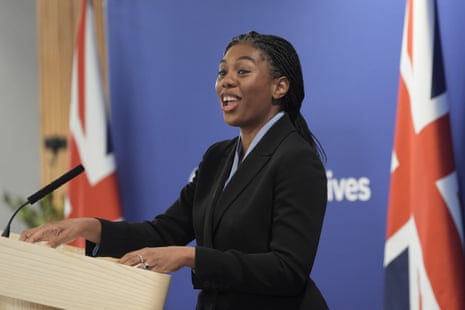
Her stance on net zero has marked a significant shift in Tory policy since the party was in government and made the commitment. She reiterated that Tories would need to back her plans to repeal the Climate Change Act of 2008 and the net zero target.
"It doesn't matter if you are a member of my shadow cabinet, or someone who has been an MP for decades, or someone standing for our party for the first time – signing this covenant will be a mandatory condition to stand as a concerted candidate at the next election," she said.
She insisted it is not a "purity test" and said while she hopes her parliamentary colleagues will sign, it is "entirely up to them".
the MP for Great Yarmouth and leader of Restore Britain, took to X with the rather blunt advice "get a job?" in response to the DWP cyber incident. Except universal credit claimants can't access the job-search service on the government website because it's currently down.
Also, according to the latest DWP figures, around 3.1 million claimants are in employment. That's approximately 37.6%, more than one in three people claiming universal credit.
The Eastern Daily Press in Norfolk reported last month that one in three working age adults in Great Yarmouth are claiming universal credit. Its sister paper, the Great Yarmouth Mercury, also reported that welfare spending in the coastal town has risen nearly 10 times quicker than wages.
Here is Pat McFadden's statement to the media in full:
We had reports of a cyber incident yesterday, and as a precautionary measure, we've taken our systems down in order to protect the public.
There's no evidence of anyone's personal details being compromised, although it is an ongoing investigation, and regular payments to the public are continuing as normal.
It's a serious cyber incident, I can't say more at this stage about what caused the incident, but we did the right thing by taking our systems down in order to protect the public, in order to protect their personal information, and made sure that regular payments could continue unaffected.
We are working with the national cyber security centre to try to get our systems back up and running as quickly as possible, and that effort is ongoing and it's the whole focus of the department right now."
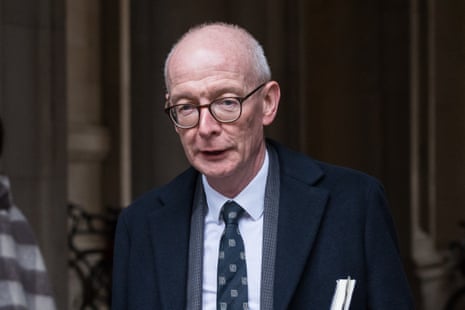
Work and pensions secretary said there is no evidence so far that any personal details were compromised in a cyber incident which prompted the DWP to take some services offline.
Asked whether the incident was a malicious act, McFadden said it was a "serious cyber incident", adding the investigation is ongoing.
A cyber security expert has warned that scammers could try to take advantage of concerns surrounding the DWP disruption, particularly among benefit claimants worried about missed payments or difficulties accessing services online.
Luis Costa, from the cyber security company Surfshark, said:
Criminals may exploit the disruption to online services by posing as DWP representatives and offering to help claimants access their accounts or submit income details.
For someone relying on their next universal credit payment to cover rent or household bills, a call claiming they could miss out on their money unless they verify their details immediately could be particularly convincing. Scammers know that financial pressure can make people act before questioning whether a call is genuine."
Costa advised claimants to be wary of unexpected calls, texts or emails claiming to offer help with their benefits or warning that payments could be at risk.
He urged people not to share personal information, bank details or security codes, click on suspicious links or pay fees. Anyone receiving a suspicious call should hang up and contact the DWP directly using the details on the government website.
Also today, the government is to back legislation aimed at preventing wealthy and powerful individuals using the courts to silence critics and curb free speech.
The justice minister Sarah Sackman told parliament on Friday that Labour would support a private member's bill sponsored by the Conservative MP John Whittingdale, who is spearheading the latest attempt to bring in anti-Slapp measures.
She told the Guardian: "Our legal system should be a route to justice, not a weapon of intimidation, used to evade scrutiny, suppress reporting or discourage people from speaking the truth."
The bill attempts to define abusive cases, often referred to as strategic litigation against public participation, or Slapps, so that they can be dismissed early before defendants incur unaffordable legal costs.
Read more:
the Labour chair of the work and pensions committee, said the DWP was right to take "swift action" to contain the impact of the cyber incident and restore services.
She said it was a "great relief" that benefits and pensions payments had not been affected.
Abrahams said:
The DWP has taken swift action to contain any potential further damage from the cyber incident and so that service is restored as soon as possible.
Although this may interrupt some services, this was absolutely the right thing to do.
It's critical that the impact on service users from the outage is investigated and analysed so that timely and accurate advice can be given to them."
Almost all benefits and pensions systems in the UK are unavailable following a "cyber incident", with the cause of the disruption as yet publicly unknown.
Anyone trying to check their state pension, make an application for disability benefits or claim universal credit was not able to do so on Friday morning. Department for Work and Pensions officials say payments will continue to be made as normal.
In other news, around a third of England's rough sleepers have so far been offered a route off the streets as part of Andy Burnham's Christmas pledge.
There were an estimated 9,369 people sleeping rough in England over the month of September, data published by the government on Friday showed.
Separate data also published by the Ministry of Housing, Communities and Local Government (MHCLG) showed that, in October, 3,276 people sleeping rough had received at least one offer of a route off the streets across areas which had been given funding at the end of September as part of the Rough Sleeping Programme.
Housing charity Shelter welcomed the figures as "a good start in helping everyone off the streets by Christmas".
But the charity added: "With nearly two thirds of people still waiting for an offer of a bed, it [government] needs to put its foot on the gas to make sure no one risks their lives on the street this winter."
No 10's spokesperson declined to rule out that the incident knocking DWP services offline had been a hack.
"It's a live and ongoing incident, and we're working as quickly as possible to restore the services," she said.
GCHQ's National Cyber Security Centre and government experts are investigating the suspected hack after unusual activity was identified yesterday.
Downing Street said there was no evidence that a "malicious actor" is targeting other government departments, after the DWP took some of its services offline following what it described as a "cyber incident".
A spokesperson said work was being carried out "as quickly as possible" to restore services, some of which appeared to be unavailable this morning, including applying for universal credit or searching for a job, the Press Association reported.
The spokesperson said: "The investigation is ongoing. I'm not going to get ahead of it.
"There's no other evidence that a malicious actor is targeted any other government departments."
The incident comes days after the government issued an alert warning of an increased risk of Russian sabotage attacks in the UK, particularly against businesses supporting Ukraine.
The DWP's most senior official told a committee of MPs this month that cybersecurity and resilience was one of the issues "that keeps a new permanent secretary awake".
Sarah Healey, the DWP permanent secretary, was appearing before the work and pensions select committee, where she was asked who would ensure that DWP systems would "not be the frontline in some sort of hybrid warfare from the Kremlin".
Supermarket fridges and freezers in seven European countries malfunctioned earlier this month, with their thermostats remotely cranked up in some cases to 50C (122F), in what was blamed on a cyber-attack. The EU has condemned what it said was "a deliberate attempt to disrupt our food supply chain and undermine consumers' confidence in it".
Read more:
It is understood that there is no evidence that personal information was affected in the DWP cyber incident.
The DWP said earlier that all payments are going out as normal.