A video circulating on social media falsely claims to show that Nurofen tablets contain graphene oxide.
The clip, which has been shared thousands of times online, shows a person who claims to put a “whole week’s worth” of Nurofen Zavance tablets into a glass of water. The speaker holds a magnet to the cloudy glass of water and a tiny amount of black material is drawn to the magnet as it moves around.
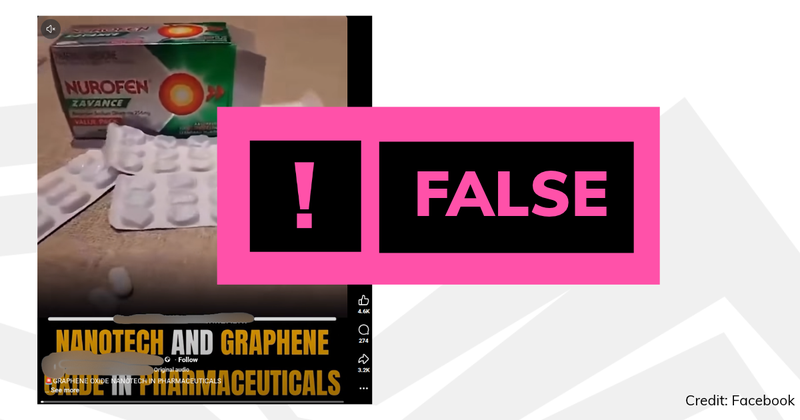
But the black material is not graphene oxide, it’s iron oxide black, which is magnetic and likely explains the effect seen in the video.
Full Fact has not replicated the experiment shown in the video to confirm whether the tablets contain magnetic substances, nor can we verify that the tablets in the water shown in the clip are actually Nurofen.
Join 75,000 newsletter subscribers who trust us to check the facts
Sign up to get weekly updates on politics, immigration, health and more.
Subscribe to weekly email newsletters from Full Fact for updates on politics, immigration, health and more. Our fact checks are free to read but not to produce, so you will also get occasional emails about fundraising and other ways you can help. You can unsubscribe at any time. For more information about how we use your data see our Privacy Policy.
What is graphene oxide?
Graphene oxide has some uses in biomedicine, mainly in the delivery of drug molecules, and there is evidence that it can be toxic in certain uses.
But both the European Medicines Agency and the Medicines and Healthcare products Regulatory Agency (MHRA) have previously said there are no medicines containing graphene oxide that are approved for use in Europe and the UK respectively.
What’s in Nurofen?
Nurofen Zavance, which is shown in the video, is a product sold in Australia and described on its website as “fast pain relief tablets” for headaches.
Australia’s regulatory body the Therapeutic Goods Administration (TGA) has published an ingredient list specifically for Nurofen Zavance. It does not contain graphene oxide, but does contain iron oxide black, which is used as a colouring agent in foods, cosmetics and the pharmaceutical industry, and is safe providing its use is in line with regulations.
False claims such as these may cause unnecessary alarm and may erode trust in medical treatments.
We have previously written about similar claims of graphene oxide in medicines and other consumer products.